Sailing school in Puerto Banús
Passing the exam is the paperwork. Handling the boat is the point. Official Spanish qualifications, with all practical training aboard our own sailing yachts out of Puerto Banús.
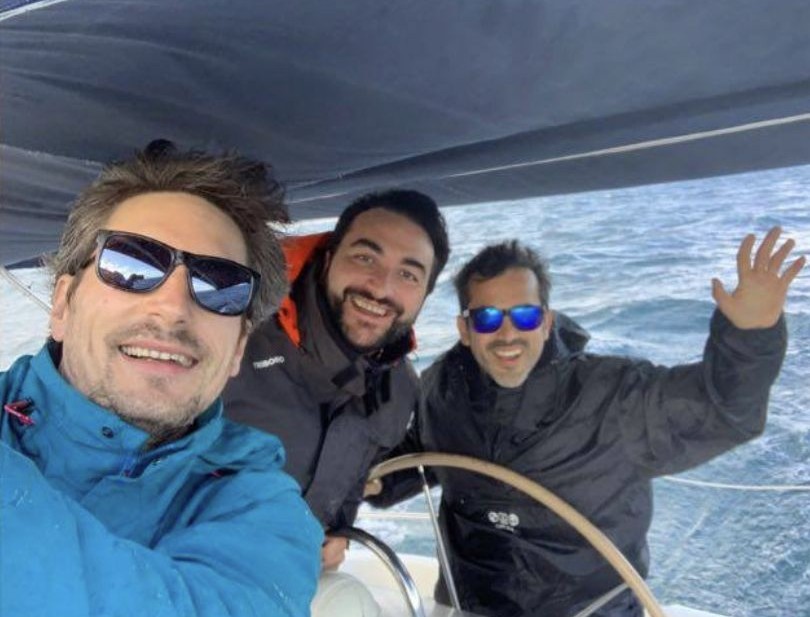
A school with its own fleet
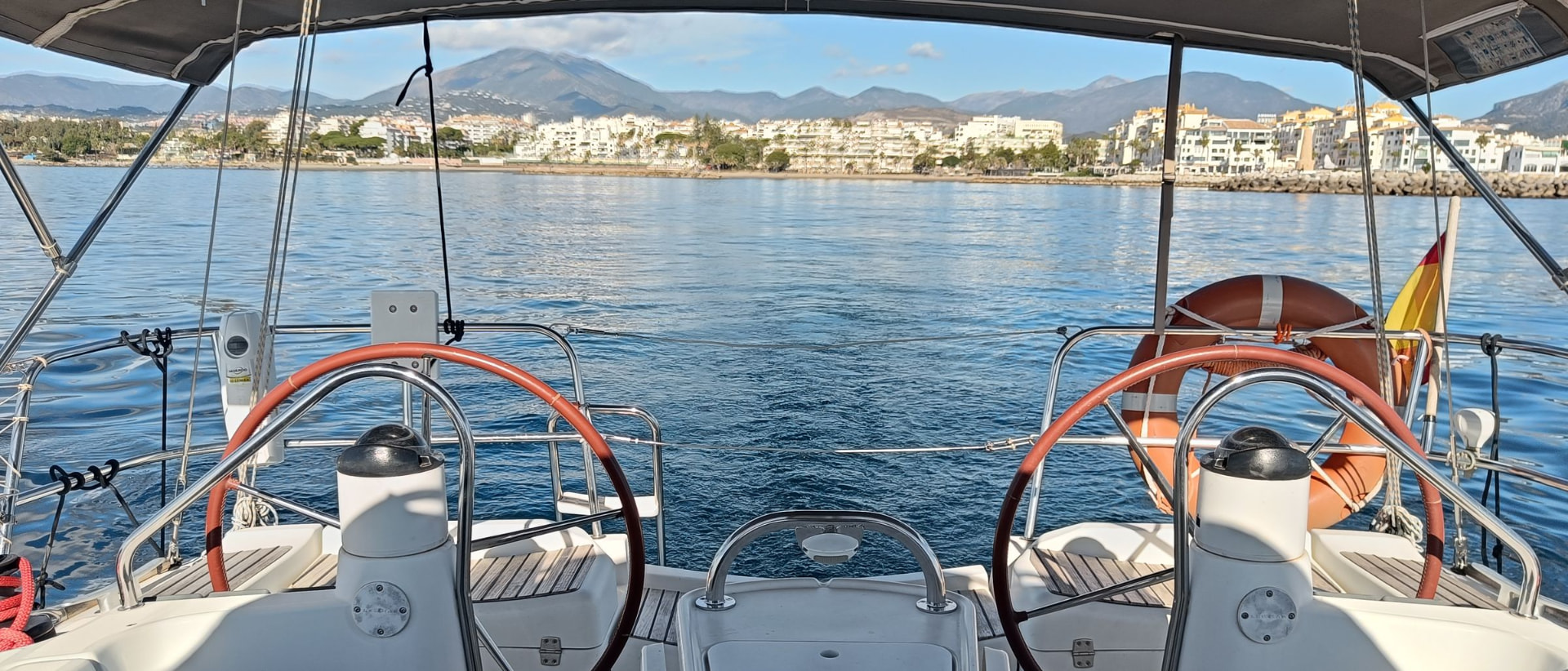
You train on our boats
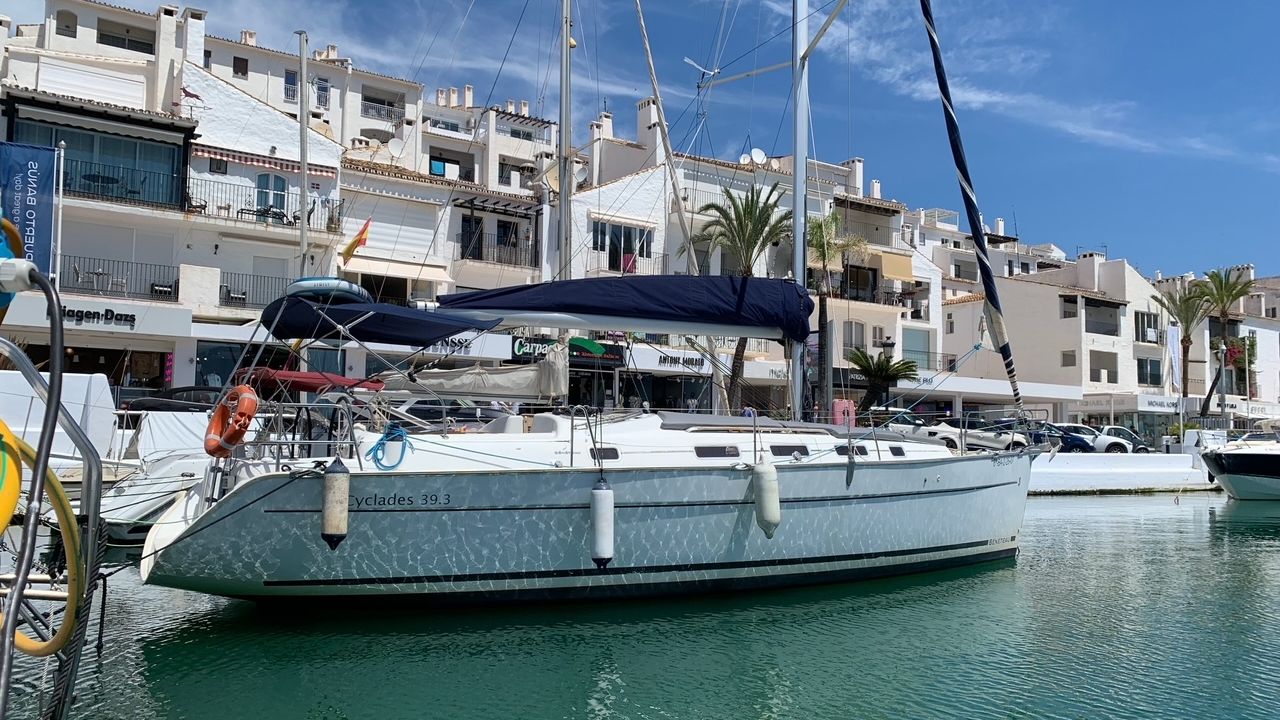
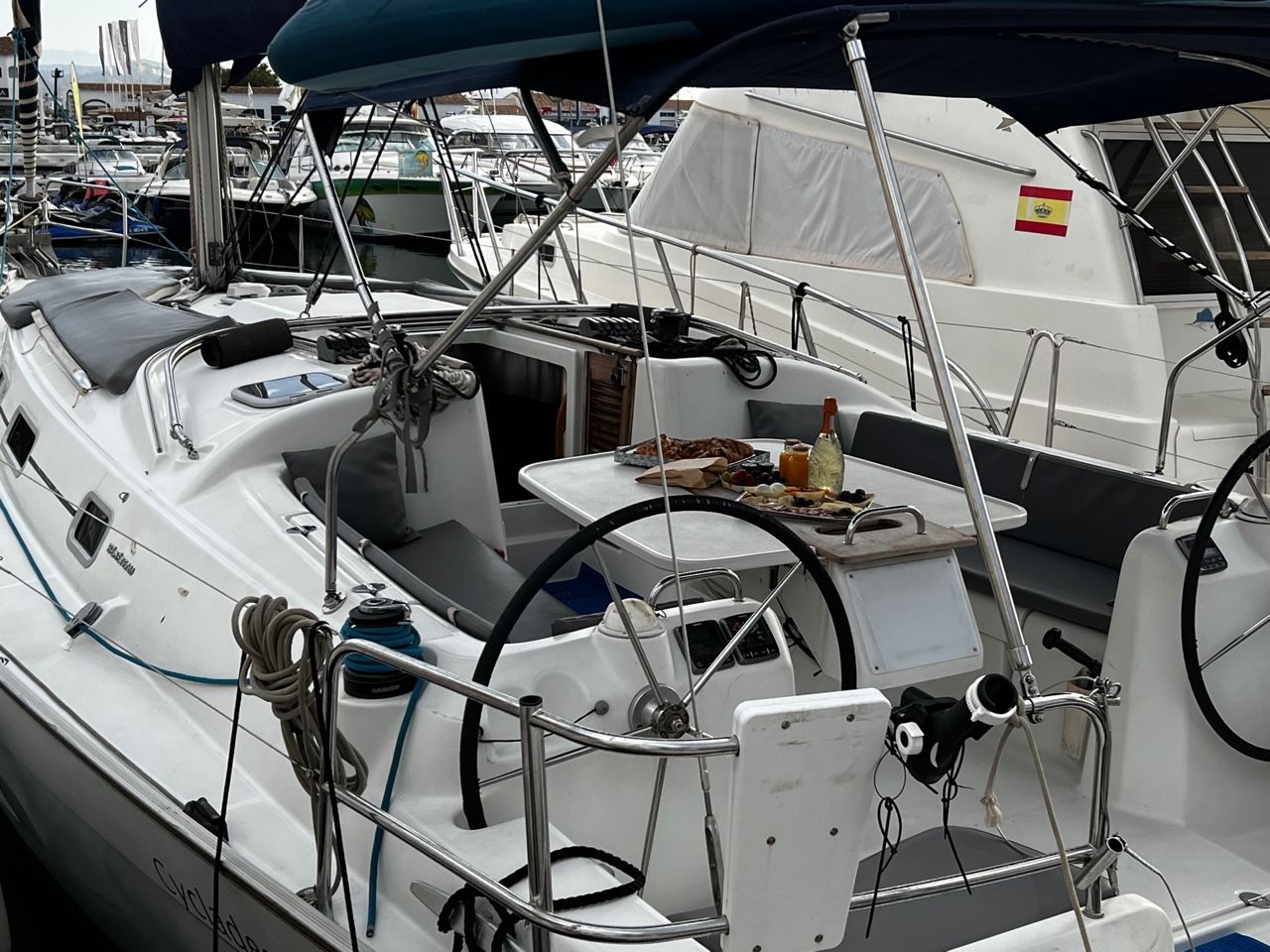
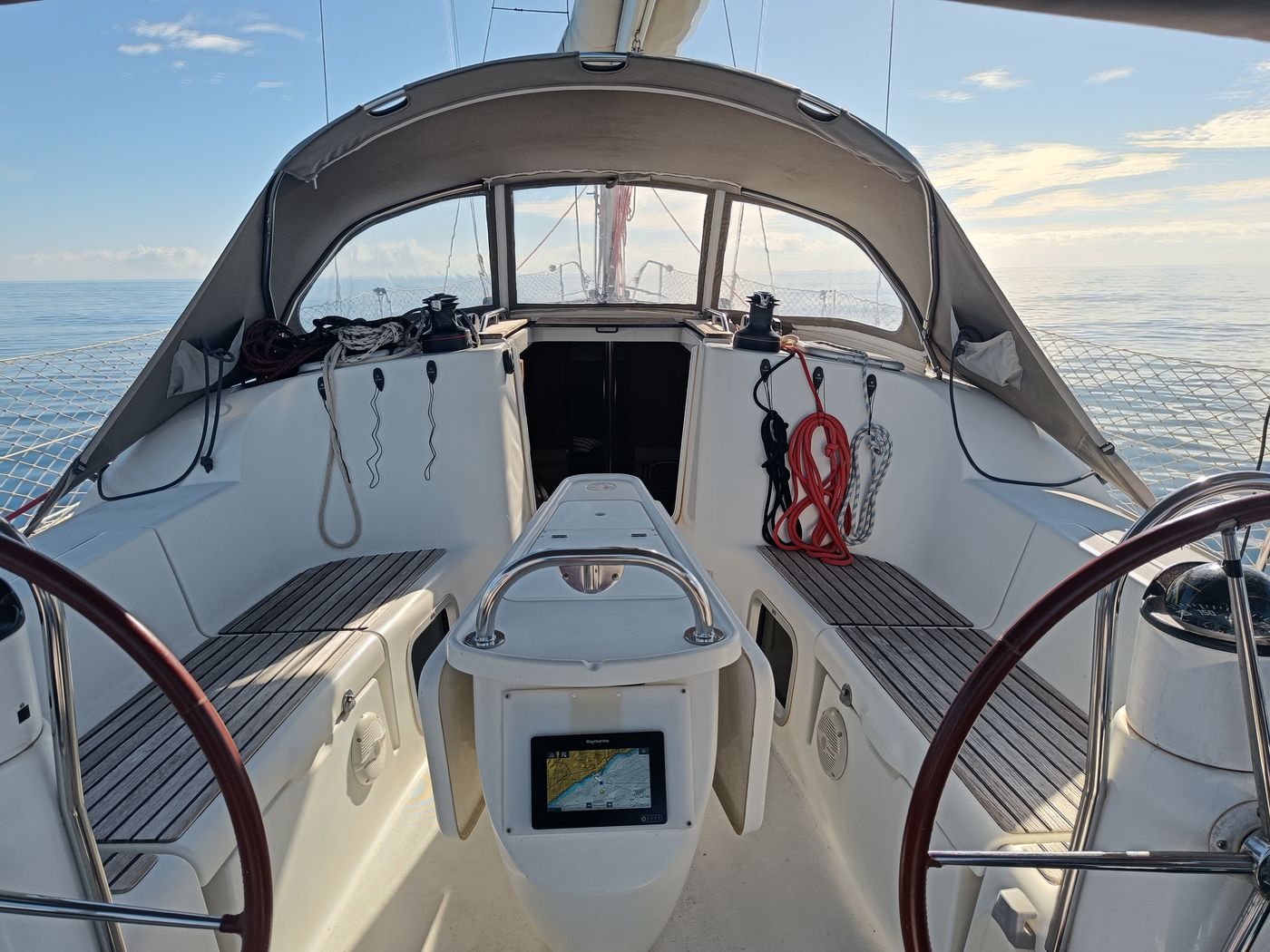
We don't hire a boat for exam day. You train on the same sailing yachts we run all year, berthed in Puerto Banús. Four boats available for sail training.
Taught by skippers who actually sail here
The person teaching you to berth is the one who berths here every day, in this wind, on this pontoon. Not classroom theory — the real manoeuvre in the marina you'll be sailing from.
Officially approved training
Courses and practicals are delivered with a school approved by the Spanish Merchant Marine authority (DGMM). An official Spanish qualification, issued by the administration.
Built around your calendar
Theory in person or by video call. Practicals on weekend intakes or on request. If you work Monday to Friday, that shouldn't decide whether you get your licence.
I already have an RYA certificate. Do I need a Spanish licence?
If you're a resident in Spain and you charter or own a boat here, the short answer is usually yes. Spanish authorities require a Spanish qualification — or an officially validated equivalent — for residents operating Spanish-flagged recreational vessels. Visitors on holiday and non-resident owners are a different case.
It's not a question worth guessing at from a forum thread. Tell us what you hold and what you sail, and we'll tell you exactly where you stand — including whether any part of your existing certification can be validated instead of repeated.
Ask us about your RYA certificateSix qualifications, one fleet
 From €992 h theory + 4 h practical
Basic Boat Licence
The fastest way to start boating — no exam required.
Up to 6 m2 nm from a port, marina or place of shelter From €240Official theory examPractical: 16 h safety and navigation
PER · Spanish Boat Licence
The most popular boating licence — for greater freedom and independence on the water.
Up to 15 m12 nm from the coast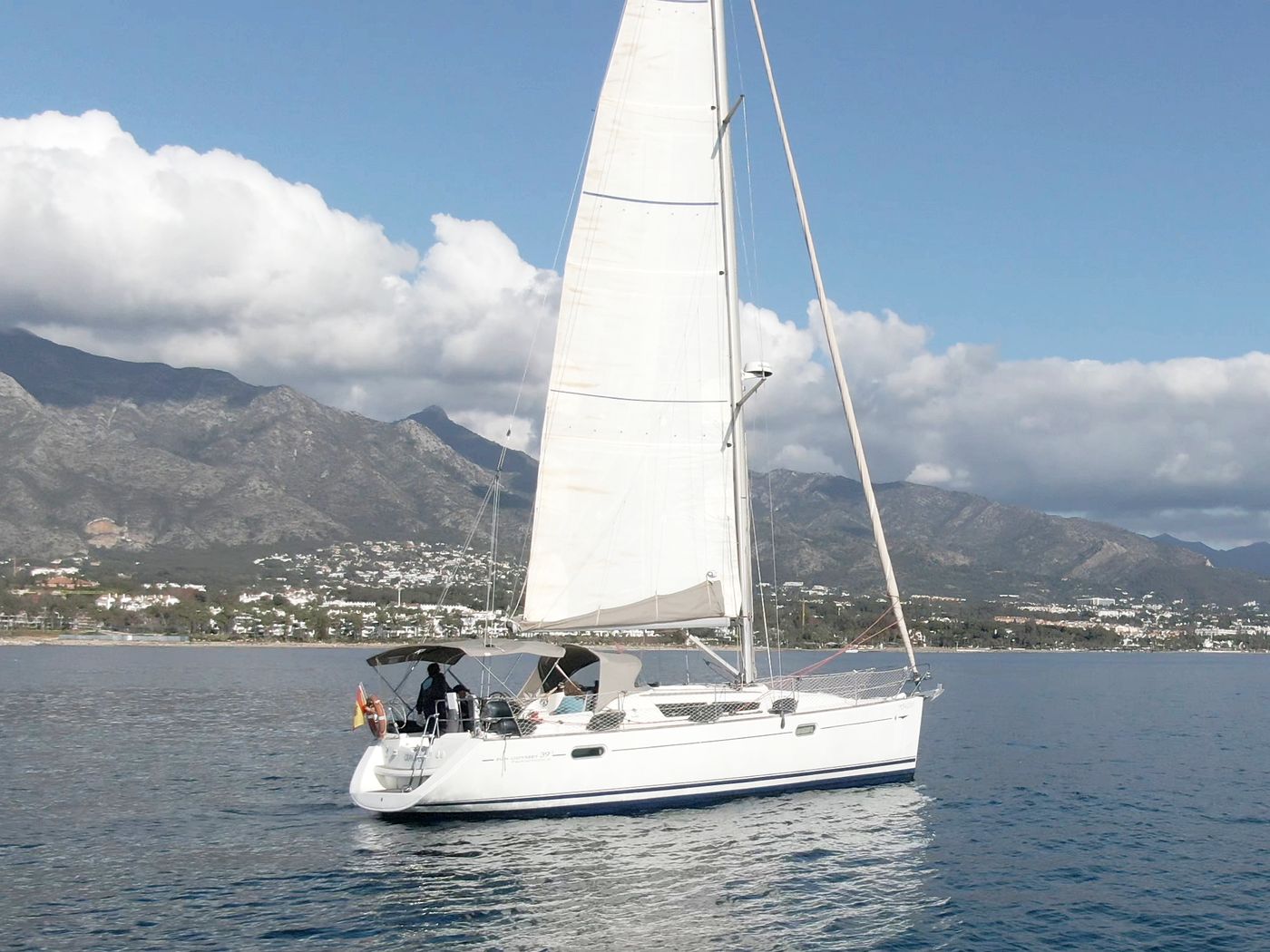 From €400Official theory examPractical: 48 h, min. 36 h on passage
Patrón de Yate · Yacht Skipper
Extend your range and enjoy longer passages on larger boats.
Up to 24 m150 nm from the coast From €400Official theory examPractical: 48 h, min. 36 h on passage
Capitán de Yate · Offshore Yacht Skipper
The highest recreational qualification — for sailing without geographical limits.
Up to 24 mUnlimited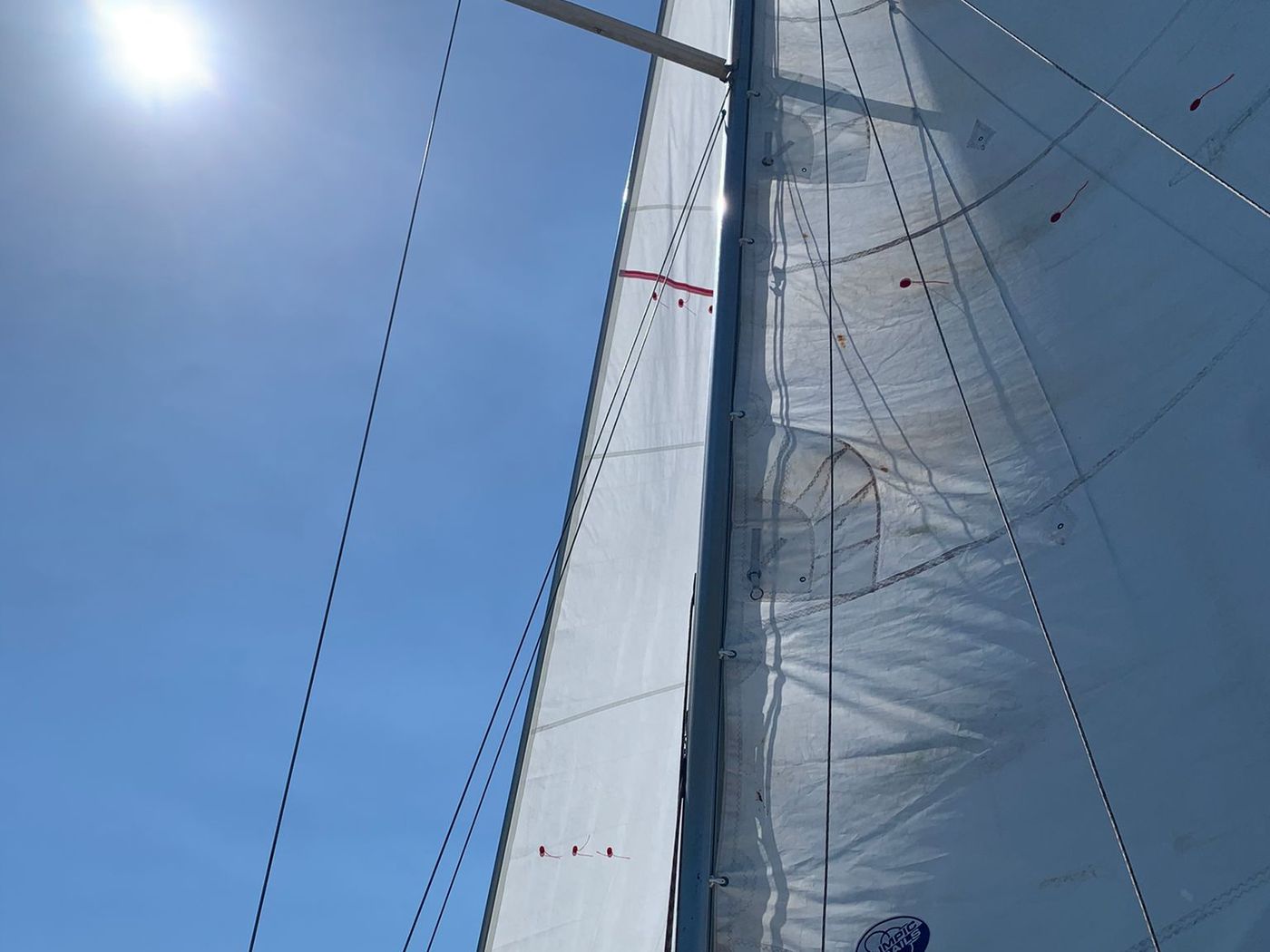 From €24016 h under sail
Sail endorsement practicals
Adds sailing to your licence and widens what you can do on the water.
 From €22012 h (4 theory + 8 simulator)
SRC · Short Range Certificate (ROCA)
Learn to operate the VHF radio safely and complete the requirements of your licence.
Which licence do you need?
Start from what you want to do, not from the acronym.
- What it allows
- Jet skis and small boats, daylight only
- Length
- Up to 6 m
- Range
- 2 nm from a port, marina or place of shelter
- Exam
- No
- Practicals
- 2 h theory + 4 h practical
- Prerequisite
- Age 16
- What it allows
- The standard recreational licence
- Length
- Up to 15 m
- Range
- 12 nm from the coast
- Exam
- Yes
- Practicals
- 16 h safety and navigation
- Prerequisite
- Age 18
- What it allows
- Coastal and offshore passages, professional endorsements
- Length
- Up to 24 m
- Range
- 150 nm from the coast
- Exam
- Yes
- Practicals
- 48 h, min. 36 h on passage
- Prerequisite
- PER
- What it allows
- No geographical limit
- Length
- Up to 24 m
- Range
- Unlimited
- Exam
- Yes
- Practicals
- 48 h, min. 36 h on passage
- Prerequisite
- Patrón de Yate
- What it allows
- Adds sail to your licence (PER, PY or CY)
- Exam
- No
- Practicals
- 16 h under sail
- Prerequisite
- One of those licences
- What it allows
- Operate VHF DSC radio. Compulsory from PER up
- Exam
- Yes
- Practicals
- 12 h (4 theory + 8 simulator)
- Prerequisite
- None
Most people who write to us need the same three things: PER + SRC + sail endorsement. That's the combination that lets you charter a 15-metre sailing yacht anywhere in Spain. If you don't know where to start, start there.
Two things nobody explains and you should know before choosing:
- All of these are motor licences by default. Sail is an endorsement, added through the 16-hour sail practicals. Without it, your licence won't let you skipper a sailing yacht.
- The PER can be extended to 24 m with 24 further hours of practicals on passage, including night navigation — which also covers the mainland–Balearics crossing.
SRC and sail endorsement: done once, valid for life
This is the question we get most often, and almost nobody explains it properly.
The SRC (ROCA) isn't repeated
It's compulsory for the PER, the Patrón de Yate and the Capitán de Yate. Do it once and it covers all three. If you move up later, it's already done.
See the SRCNeither is the sail endorsement
Sixteen hours of practical sail training — the hours that add sail to your licence. Without them, a PER is a motor licence. Done once, valid for life and for every qualification you hold afterwards.
See the sail endorsementPut differently: if there's any chance you'll go for Patrón de Yate one day, doing these two now isn't spending early — it's work you'll never have to repeat.
From 1 October 2026, renting a boat without a licence ends
Until now you could rent a motorboat of up to 5 metres and 15 hp with no qualification at all. That exemption is being removed. Royal Decree 1188/2025 repeals it, and from 1 October 2026 anyone renting will need the corresponding licence.
If your plan for next summer was to rent a small boat and go, you now need at least the Basic Boat Licence. Six hours, no exam.
See the Basic Boat LicenceHow it works
- 01
A ten-minute conversation
Tell us what you want to do with a boat and we'll tell you which licence you actually need. It's often less than you think.
- 02
Theory, at your pace
Small in-person groups or live video sessions with a tutor. Material kept current with the regulations — not a PDF and good luck.
- 03
The official exam
We prepare you for the regional exam and handle the admin with you: dates, fees, paperwork.
- 04
Practical training in Puerto Banús
Anchoring, berthing, boat handling, safety. On our sailing yachts, with our skippers. This is where it's actually learned.
The calendar decides
You set the pace of the theory. The exam and the practicals set everything else. Here are the November 2026 dates and the practical intakes still open.
The official exam
It's called by the regional government, not by the school. We prepare you and handle the paperwork, but nobody moves the date.
- Exam
- Saturday 14 November 2026
- Enrolment window
- 14 July – 25 October 2026
- Qualifications
- PER, Patrón de Yate and Capitán de Yate
- Venues
- Faculty of Law, University of Málaga · Puerto Real Campus lecture building, Cádiz · Universidad Pablo de Olavide, Seville
It's the last sitting of the year in Andalusia. The next one is March 2027.
Miss Andalusia and you still have Murcia
The qualification is national: you sit the exam in whichever region you like and it's valid across Spain. Murcia closes its window three days after Andalusia and examines a week later.
- Patrón de Yate and Capitán de Yate — Saturday 21 November 2026
- PER — Sunday 22 November 2026
Enrolment — 13–28 October 2026
Venue — University of Murcia, Espinardo Campus
Being straight about it: that's a four-hour drive from Marbella and a weekend away. It isn't the convenient option — it's the one that still exists when the convenient one has closed.
Enrolling for the exam and being ready for it are two different things, and they happen in that order. Enrolment is a fee and a form; preparation has months ahead of it. Wait until you feel ready and the window will have closed, with March as your next chance.
The practicals
These ones are ours — on our own sailing yachts, out of Puerto Banús.
- 17–18 October 202612 h · 4 theory + 8 on the simulator
- 24–25 October 202616 h · one weekend
- 21–22 November 202616 h · one weekend
Watch the 24–25 October intake: it ends on the same Sunday the Andalusian enrolment window closes. If you're taking that one, enrol before you get on the boat.
None of these dates work? Message us. Practicals also run on request, and we handle the exam admin for you.
Message us on WhatsAppThe school, straight answers.
For a yacht up to 15 metres you need the PER, plus the sail endorsement. If the boat carries a VHF radio — and every charter boat does — you'll also need the SRC (ROCA). That's the full package any charter company will ask for.
In practice, across most of the Mediterranean, yes — charter operators in Croatia, Greece, Italy and elsewhere routinely accept the PER. But it's worth being precise, because there's a lot of confusion about this: there is no automatic mutual recognition of recreational boat licences within the EU. Each country sets its own equivalences, and Spain does not issue the ICC. Always confirm with the local operator before you book. On a Spanish-flagged vessel, your licence is fully valid.
Yes — live video sessions with a tutor, not a pre-recorded course. Practicals are in person in Puerto Banús.
Between six weeks and three months, depending on your pace and the exam date. You set the theory; the exam and practical intakes set the calendar.
14 November 2026, at the Faculty of Law of the University of Málaga. It's the third and final sitting of the year in Andalusia, and enrolment closes on 25 October 2026. If you miss it, Murcia examines on 22 November with enrolment open until 28 October, and the qualification is equally valid across Spain.
Yes, and we recommend it. Enrolling means paying the fee and filing the application; preparing is a separate thing with months ahead of it. The most common mistake we see is waiting to feel ready — by then the window has closed and the next Andalusian sitting is in March.
Yes. The PER requires 16 hours of safety and navigation at an approved school; Patrón de Yate and Capitán de Yate require 48 hours each, of which at least 36 must be on passage with day and night watches. Some Spanish regions allow the PER practicals to be replaced by an official practical exam instead — tell us where you'll sit the exam and we'll tell you which route applies to you.
If you never did the 16-hour sail endorsement, you can't legally skipper a sailing vessel on that licence. It's the single most common gap we see — and it's a weekend.
Practicals depart from Puerto Banús, Marbella — pontoon 4. Theory in person or by video call.
Not sure where to start?
Message us and we'll tell you in two minutes which licence you need. No obligation, and no selling you a course you don't need.